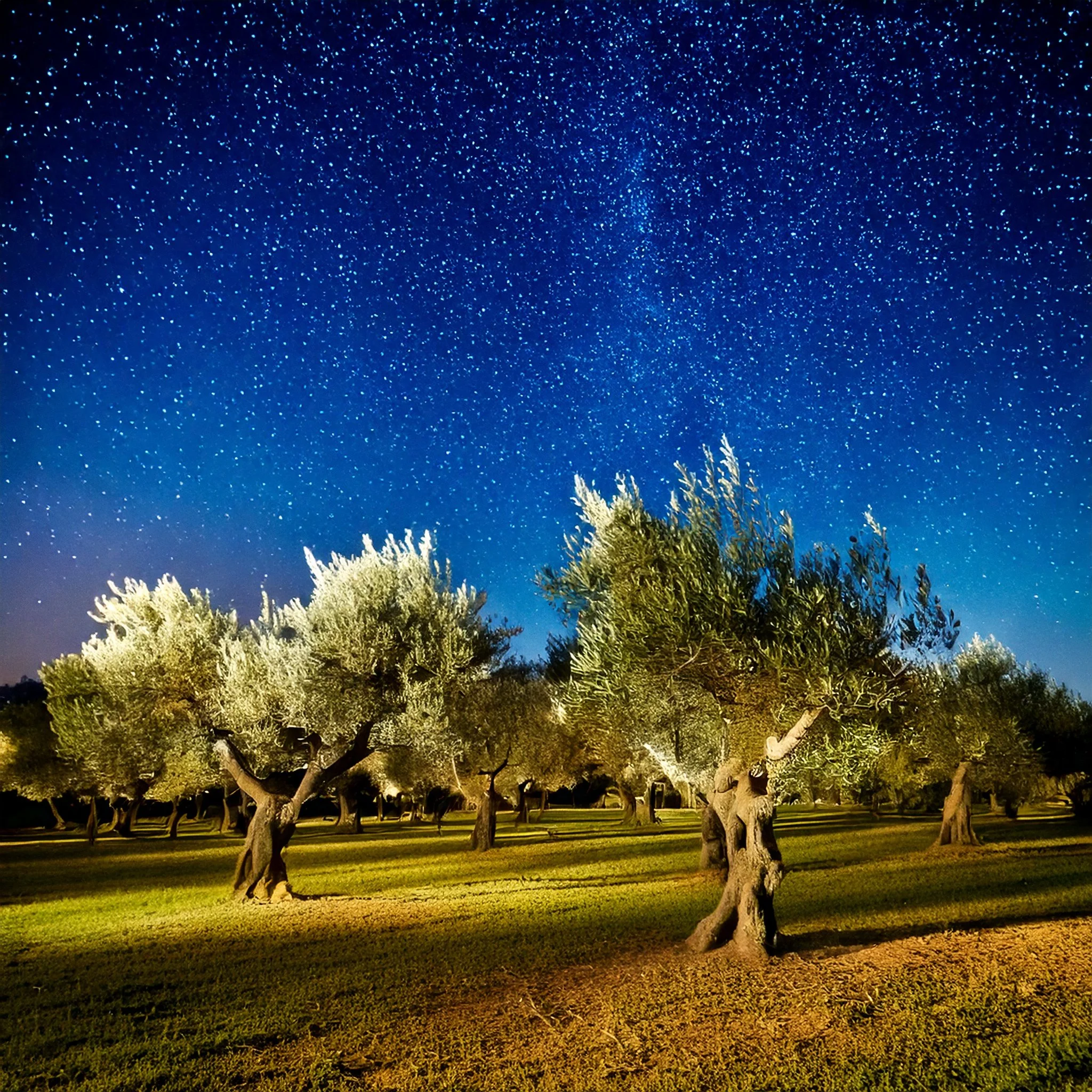
They went to a place called Gethsemane; and he said to his disciples, ‘Sit here while I pray.’ He took with him Peter and James and John, and began to be distressed and agitated. And he said to them, ‘I am deeply grieved, even to death; remain here, and keep awake.’ And going a little farther, he threw himself on the ground and prayed that, if it were possible, the hour might pass from him. He said, ‘Abba, Father, for you all things are possible; remove this cup from me; yet, not what I want, but what you want.’ He came and found them sleeping; and he said to Peter, ‘Simon, are you asleep? Could you not keep awake one hour? Keep awake and pray that you may not come into the time of trial; the spirit indeed is willing, but the flesh is weak.’ And again he went away and prayed, saying the same words. And once more he came and found them sleeping, for their eyes were very heavy; and they did not know what to say to him. He came a third time and said to them, ‘Are you still sleeping and taking your rest? Enough! The hour has come; the Son of Man is betrayed into the hands of sinners. Get up, let us be going. See, my betrayer is at hand.’ (Mark 13:32-42)
Always hoped that I'd be an apostle
Knew that I would make it if I tried
Then when we retire we can write the gospels
So they'll still talk about us when we've died
At least, this is how Andrew Lloyd Weber imagined the garden sounding after the disciples shared the Passover. The ending of Mark’s Gospel is loud. Jesus says his betrayer is at hand and a crowd arrives with swords and clubs, and this now rouses the sleepy disciples. When Peter follows at a distance and denies Jesus, the rooster crows more than once. He says he doesn’t know him—the rooster crows—yet Peter denies him twice more, as if the chaos of the evening was too loud to hear the very warning Jesus had given. Jesus told him that it would happen and still he couldn’t hear it. During the crucifixion the crowd derides, jeers, and mocks so boisterously that when Jesus says, “Eli, Eli, lama sabacthani,” which means, “My God, my God, why have you forgotten me?” from the 22nd Psalm, they think he’s calling for Elijah. Jesus then gave a loud cry and breathed his last.
But the garden. The garden is the calm before the storm. Things were so uncomfortably silent that the disciples fell asleep. This wasn’t the soothing sound of crickets or campfires. It’s the kind of silence that happens when the test results were not what you hoped or “we the jury find,” and it’s not what you expect or the doctor comes out of the operating room and says, “We did everything we could.” Jesus is in anguish. Their rabbi. Their friend. The one who heals and comforts and speaks truth to those who would ignore it, is in distress, and the disciples don’t know what to say.
Have you ever been in that kind of place where the only thing your body knows to do is shut down? I don’t think the disciples brought pillows to the garden, but I do imagine that they were tangled in a quiet ache as a pall that lulled them into paralysis.
Jesus doesn’t fill the air with poetry or a teaching moment unpacking atonement theology and the necessity of his sacrifice to take away the sins of the world. He says “I don’t want to do this.” The language is much more formal and decisive to meet the anguish and distress of the moment. Jesus begins his prayer with “Abba.” It is an intimate term. God as Father is rare in the Hebrew scriptures, almost only found at the end of Isaiah and almost only in the context of recognizing that God restores the people of Israel. “Abba, Father, in you all things are possible,” which means that restoration and wholeness of a people isn’t just a dream for intellectuals to propose, broken spirits to hope, or preacher to proclaim on the steps of the Lincoln Memorial, is the reality of God’s own heart. And yes, wholeness and restoration of a people is possible, but that doesn’t mean it doesn’t cost everything, and Jesus of Nazareth, divine and also fully human, was looking up to the heavens saying, “I don’t want to do this.”
I imagine the semicolon in the verse, “remove this cup from me; yet, not what I want, but what you want,” lasted for an eternity. The difference between words on a page and notes on a staff is that a composer can add rests to the music. I feel like all of creation held its breath in the garden. “To be…or not to be…that is the question”
So, tonight, this message isn’t about answers or explanations, but it is an offering. I’d like to invite you into that space, to bring your “I don’t wanna,” or your “take this cup” or “Lord, I just don’t know what to say or do,” and to let it be. Sit with it as a friend. You’re invited to light a candle or remember your baptism or to go the garden. We have two of them tonight. Our choir room has been beautifully consecrated as a garden-like space for you to pray, or feel free to go to our prayer garden in the back of our property. We won’t be coming back to this space tonight. Like the disciples, we will disperse. So the invitation is also the benediction. Stay as long as you like or a short as you need. My prayer is that after sitting with your “I don’t wanna” something will become more clear, but I also assume that this clarity won’t be easy. As we will soon see, there’s a cross between here and resurrection. Go in peace. Amen.